When comparing a Level 2 vs Level 3 survey, the essential difference is depth. An RICS Level 2 survey provides a concise report on a conventional home in reasonable condition, including advice on repairs and maintenance. An RICS Level 3 building survey involves a more thorough inspection and a detailed report, and is intended for properties that are large, older, run-down, unusual or altered, and for buyers planning major works. The right choice depends on the property’s age, construction, condition and history, and on what you intend to do with it.
This guide from the RICS Chartered Surveyors at Lansdown Associates explains how the two surveys differ, what affects their cost and when each is appropriate. It also explains when a Level 1 survey may be sufficient.
The three RICS Home Survey levels
The RICS Home Survey Standard provides three levels of residential survey:
- Level 1: a condition report for conventional, newer homes in good condition, without advice on repairs or maintenance.
- Level 2: a concise report for conventional properties in reasonable condition that are simple in form and layout, including advice on repairs and ongoing maintenance.
- Level 3: a thorough inspection and detailed report for large, older, run-down, unusual or altered properties, or where major works are planned.
All three use the same condition ratings: 3 for defects that are serious and/or need to be repaired, replaced or investigated urgently; 2 for defects that need repairing or replacing but are not serious or urgent; 1 where no repair is currently needed; and NI where an element was not inspected.
Level 2 vs Level 3 survey at a glance
| Level 2 (survey only) | Level 3 building survey | |
|---|---|---|
| Best suited to | Conventional homes built from common materials, in reasonable condition and simple in form | Large, older, run-down, unusual, altered or listed properties, or where major works are planned |
| Roof space | Entered where safe; insulation not moved | Entered where safe; small corners of insulation lifted to check type and thickness |
| Contamination and environmental enquiries | Not made | Made |
| Flats | Drains, lifts, fire alarms and security systems not inspected | These are inspected within the flat’s boundary, in normal everyday use |
| Advice on defects | Concise advice on repairs and maintenance | Detailed advice on probable cause, repair options and likely timescale |
| Risks to the building or people | Listed and explained | Explained, with how to resolve or reduce them |
| Repair cost estimates | Not included as standard | Where practicable and agreed |
| Energy | EPC checked for obvious discrepancies | As Level 2, plus advice on the EPC’s recommended improvements |
| Market valuation | Not included | Not included |
How the two surveys differ
Scope and depth of inspection
At both levels, the surveyor inspects the inside and outside of the main building, all permanent outbuildings, boundaries and shared areas. RICS describes the Level 3 inspection as careful and thorough, and it extends to enquiries about contamination and environmental dangers. Neither survey is intrusive: the surveyor does not lift fitted floor coverings or floorboards, move heavy furniture or remove secured panels. At Level 3, the fabric is not opened up without the owner’s or occupier’s consent, or where there is a risk of injury or damage.
Reporting
A Level 2 report describes the condition of each element objectively, explains the relative importance of the defects found and advises on repairs and maintenance. Where the surveyor cannot reach a conclusion with reasonable confidence, further investigation is recommended.
A Level 3 report goes further. For each element, it explains the construction, the most probable cause of any defect, the repair options and their likely timing, and the identifiable risk of potential or hidden defects. From a surveying perspective, this explanation of cause is often where the value of a Level 3 survey lies. A crack or a damp patch is a symptom; understanding why it has occurred determines whether the remedy is a minor repair or a significant undertaking.
What affects the cost
Survey fees vary from property to property. RICS explains that surveyors base their fees on the time needed to provide the level of service required, together with associated costs such as travel. The main factors are:
- the level of survey chosen
- the size, layout and complexity of the property
- its age, construction and condition
- location and travel
- any extra services agreed in writing, such as cost estimates at Level 3
Because a Level 3 survey involves a longer inspection and a more detailed report, its fee is usually higher than that of a Level 2 survey of the same property. The cheaper survey is not necessarily the more economical one. The difference in fee should be weighed against the potential cost of repairs, and the value of understanding their cause, before a legal commitment is made.
Which survey should you choose?
The following factors usually determine the appropriate level. Where several of them point towards Level 3, it is generally the safer choice.
Age
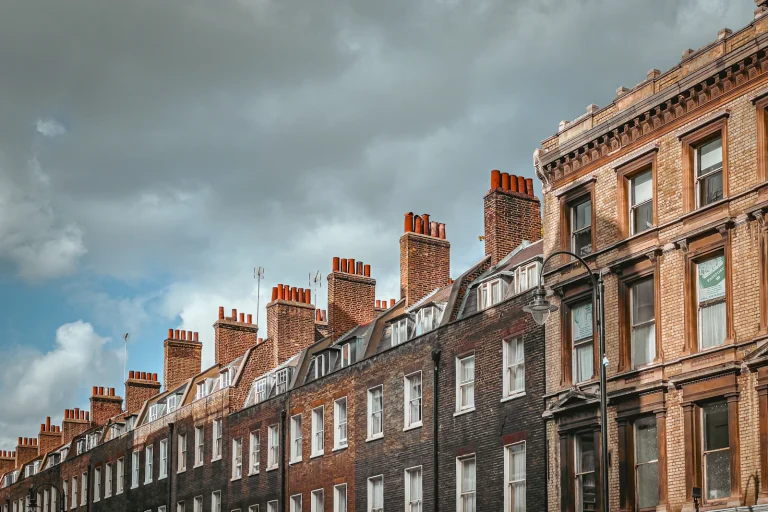
There is no fixed age at which a Level 3 survey becomes necessary. As a broad guide, homes built after 1900 using traditional materials and kept in reasonable order are often well served by a Level 2 survey, while period properties such as Victorian and Edwardian homes more often benefit from a Level 3 survey. Age matters because of what tends to accompany it: ageing materials, concealed timbers and earlier repairs of varying quality.
Construction
A conventional brick or block house in reasonable condition generally suits a Level 2 survey. RICS points to Level 3 for timber-framed buildings and thatched roofs, and the same applies to non-traditional construction and converted buildings. Lansdown Associates surveys thatched and timber-framed properties, and our RICS Chartered Surveyors can advise on the appropriate level of survey for them.
Condition
Where defects are already visible, such as significant cracking, damp staining or a sagging roof line, a Level 3 survey is advisable because it explains the probable cause and the options for repair. If cracking is the concern, our guide to what is subsidence explains the warning signs.
Alterations and extensions
Where walls or chimney breasts have been removed, a loft converted or the house extended, a Level 3 survey allows those alterations to be examined in greater depth. Your conveyancer should also check that planning permission and building regulations approval were obtained where required.
Planned works
If you intend to extend, remodel or renovate, a Level 3 survey is recommended, and the surveyor should be told about your plans before the inspection. RICS designs Level 3 to support decisions about repairs, maintenance and upgrading, not only the purchase itself.
Listed status
RICS recommends a Level 3 survey for a listed building. Historic fabric and past repairs require careful assessment. Works to a listed building may require consent, which is a matter to raise with your conveyancer and the local planning authority.
When a Level 1 survey is enough
An RICS Level 1 survey suits conventional, newer homes that appear to be in good condition. The surveyor views the roof structure from the access hatch without entering the roof space, and the report does not advise on repairs or maintenance. If the property is older or altered, or you expect to find defects, a Level 2 or Level 3 survey is the better starting point.
Still unsure which level you need?
RICS asks clients to tell the surveyor, before the inspection, the agreed or proposed price and any particular concerns about the property. Our RICS Chartered Surveyors will use that information, with the property’s age, type and history, to recommend the appropriate level. If we consider that a Level 2 survey would not be sufficient, we will say so before you instruct us.
Once you have your report, our guide on what to do if your survey finds problems explains the next steps. If you are selling, see our guide to preparing for a house survey. At the viewing stage, see what to look for when buying a house.
Frequently asked questions
Is a Level 3 survey the same as a structural survey?
It is the modern equivalent of what was commonly called a full structural survey. It covers the whole building, including the structure, but it is not a structural engineer’s calculation-based report. Where significant structural concerns arise, further investigation by a structural engineer may be recommended.
Is a Level 2 survey enough for an older house?
Often, for a traditionally built home in reasonable condition that has not been substantially altered. For a large or period property, or one already showing defects, a Level 3 survey is more appropriate.
Does either survey include a valuation?
No. Our Level 2 service is survey only, and a Level 3 survey reports on condition, not market value. A mortgage lender’s valuation is for the lender’s purposes and is not a survey of condition.
Will a Level 3 survey tell me what repairs will cost?
Where practicable and agreed at the point of instruction, a Level 3 report can include estimated costs and likely timescales for identified repairs. Costing of repairs is not part of the standard Level 2 service.
Arrange your survey
Lansdown Associates’ RICS Chartered Surveyors carry out Level 1, 2 and 3 surveys across London, Birmingham, Liverpool, Manchester, Leeds and Northern Ireland. Call 0151 374 0905 or email office@lansdownassociates.co.uk (Monday to Friday, 09:00 to 17:00) and tell us about the property. We will recommend the appropriate level and provide a free quotation.