
Awaab’s LawAwaab’s Law surveys for social landlords
An Awaab’s Law survey from Lansdown Associates gives social landlords a competent, independent investigation of a reported hazard, with written findings you can act on within the legal timescales. Our RICS Chartered Building Surveyors establish whether a significant or emergency hazard is present, identify the cause, specify the safety work and supplementary preventative work needed, and return to verify the outcome. Our reports are structured to support your tenant summary and your compliance records.
This service is for local authorities, housing associations and other registered providers in England. For day-to-day responsive, void and portfolio work, see our damp and mould surveys for housing associations.
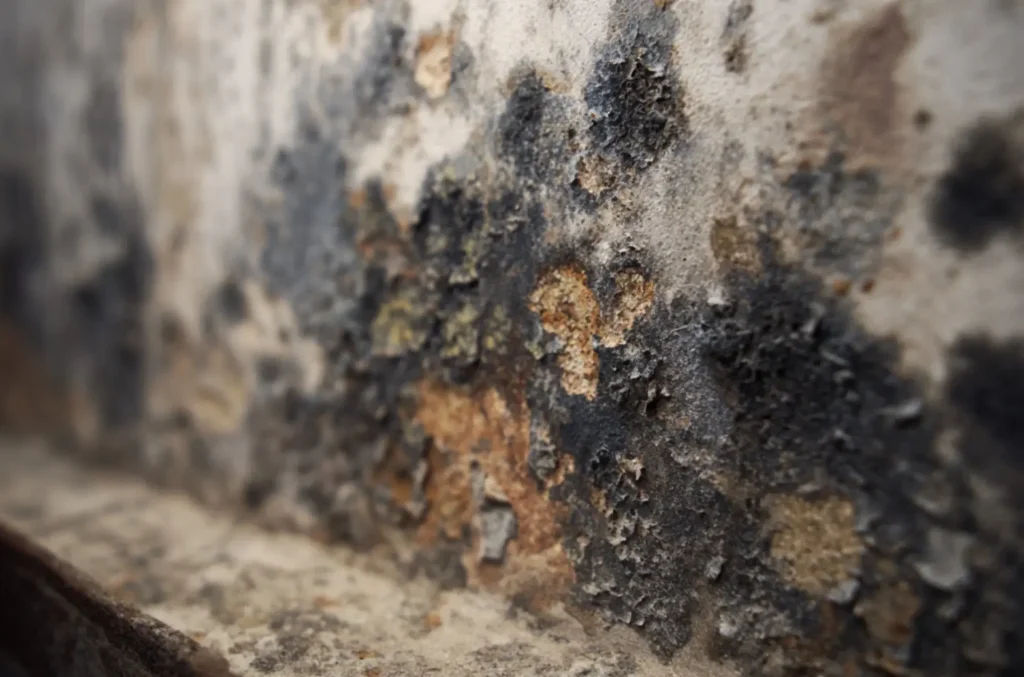
What Awaab’s Law requires
Awaab’s Law was introduced by the Social Housing (Regulation) Act 2023, which inserted section 10A into the Landlord and Tenant Act 1985. The detailed rules are in the Hazards in Social Housing (Prescribed Requirements) (England) Regulations 2025. They apply to social landlords in England and take effect as implied terms of the tenancy. If you are new to the law, start with our guide to what Awaab’s Law is.
| Requirement | Timescale |
|---|---|
| Emergency hazards – investigate and complete relevant safety work | Within 24 hours of becoming aware |
| Significant hazards – investigate | Within 10 working days of becoming aware |
| Emergency and significant hazards – written summary to the tenant | Within 3 working days of the investigation concluding |
| Significant hazards – relevant safety work | Within 5 working days of the investigation concluding |
| Supplementary preventative work | Begin (or take steps to begin) within 5 working days of the investigation concluding, or within 12 weeks where that is not reasonably practicable; complete within a reasonable time |
If a home cannot be made safe within the timescales, the landlord must offer suitable alternative accommodation at its own cost until the work is done. Tenants can complain, go to the Housing Ombudsman or bring a claim for breach of contract, and the Regulator of Social Housing enforces through the Consumer Standards.
The government’s Awaab’s Law guidance for social landlords says investigations must be carried out by someone the landlord reasonably believes is competent, meaning a person with the skills and experience to decide whether the home is affected by a significant or emergency hazard. It also expects landlords to use properly qualified specialists where relevant. That is the gap we fill.
When to bring in a chartered surveyor
Your own teams can handle many reports. An independent Awaab’s Law survey is most useful when:
- The cause of damp and mould is unclear, or previous repairs have not worked.
- A standard investigation concludes that a more detailed survey is needed to diagnose the underlying cause, a situation the guidance specifically anticipates.
- The case involves a complaint, a Housing Ombudsman referral or a threatened disrepair claim.
- You need an impartial view to resolve disagreement between the tenant, your contractor and your repairs team.
- A hazard may involve structural, fabric or building services defects beyond a routine repairs inspection.
- You want independent assurance that your process and records would stand up to scrutiny.
What our Awaab’s Law survey covers
Rapid hazard investigation
We aim to inspect in time for you to conclude your investigation within the 10-working-day window, and we usually attend within 2 to 3 working days of instruction. For emergency hazards, we offer a 24-hour call-out in Liverpool and the surrounding area. Please tell us the date you became aware of the hazard when you instruct us, so we can plan the inspection around your deadline.
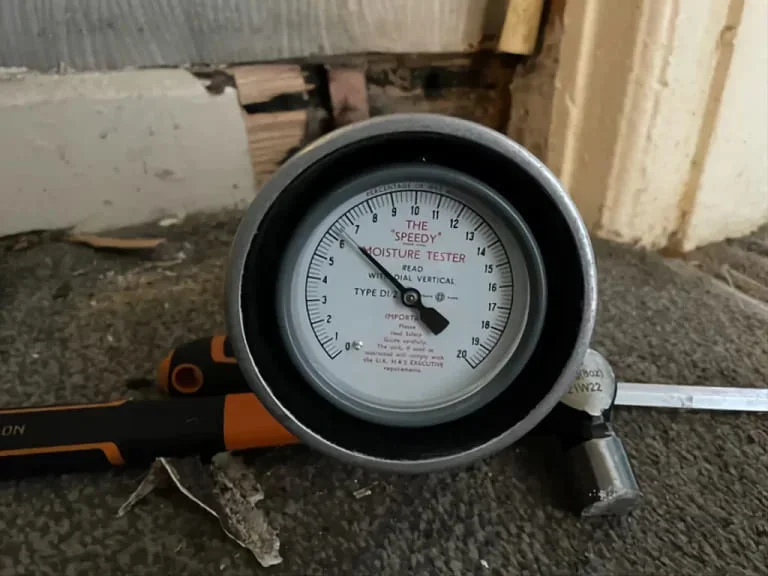
On site we inspect the property inside and out and use moisture meters, thermal imaging, calcium carbide testing, salt analysis, airflow analysis, and temperature, relative humidity and dew point readings as needed. We record whether a significant or emergency hazard is present and why, with reference to the HHSRS damp and mould hazard and the risk to the household, including any vulnerable occupants.
Written findings that support the tenant summary
The law requires you to give the tenant a written summary within 3 working days of the investigation concluding. Our report is set out so that the information you need is easy to lift across:
- Whether a significant or emergency hazard was identified, and what it is.
- The relevant safety work needed to make the home safe.
- Any supplementary preventative work needed to stop the hazard recurring.
- Where no hazard is found, the reasons for that conclusion.
You remain responsible for issuing the summary and setting your target dates. We normally issue our report within 5 to 7 working days of the inspection, and we will agree the timing with you when you instruct us.
Specifying safety and preventative work
We separate the immediate safety work from the longer-term preventative work, so you can meet the 5-working-day safety deadline without losing sight of the root cause. We also prepare specifications and scopes of works for your contractors, so that the work instructed addresses the cause we have identified.
Post-works verification
Once the works are complete, we can re-inspect and take follow-up readings to confirm the hazard has been addressed. This shows that the problem has been resolved, which a closed job record on its own does not.
Record-keeping support
The guidance stresses clear records of investigations, communications and access attempts, which also support a reasonable-steps defence where delays are genuinely beyond your control. Our dated, photographed reports and verification inspections form part of that audit trail.
Phase 2 from 30 November 2026
From 30 November 2026, the same duties extend to further hazards where they present a significant risk: excess cold and excess heat, falls, structural collapse, fire, electrical, explosions and domestic hygiene. Phase 3 in 2027 is expected to cover the remaining HHSRS hazards except overcrowding. See the Awaab’s Law timeline and the government’s Phase 2 guidance.
As an RICS practice, our RICS Chartered Building Surveyors investigate the building-related hazards added in Phase 2, such as excess cold and excess heat, falls, structural collapse and domestic hygiene, alongside damp and mould. Where a hazard needs specialist testing, for example of electrical installations or gas, we identify it and recommend the appropriate specialist investigation.
How it works
- Instruction – send us the address, the reported issue, the date you became aware and any access arrangements.
- Inspection – a Chartered Building Surveyor attends and carries out the investigation.
- Findings – we confirm whether a significant or emergency hazard is present and send our written report.
- Works – you instruct safety and preventative work, using our specification if needed.
- Verification – we re-inspect and confirm the outcome for your records.
Why Lansdown Associates?
- Independent – we do not carry out repairs or sell treatments, so our findings are impartial.
- RICS regulated – investigations by RICS Chartered Building Surveyors.
- Built for scrutiny – our director John Jackson MRICS MEWI is a member of the Expert Witness Institute (EWI), and our reports are written to stand up in complaints, Ombudsman cases and claims.
- Social landlord experience – social landlords are among the clients we already serve.
- Coverage – offices in Liverpool, Manchester and London, also covering Birmingham and Leeds.
Frequently asked questions
Does Awaab’s Law apply to private landlords?
Not yet. The Renters’ Rights Act 2025 contains powers to extend it to private rentals, but no start date has been confirmed. Read more about Awaab’s Law and private landlords.
Can an Awaab’s Law investigation be done remotely?
The guidance allows standard investigations to be carried out remotely where photos or videos are enough to decide whether a hazard exists, but the tenant can request an in-person inspection. Where the cause is unclear or disputed, an on-site inspection is usually the safer route.
Does using your survey make us compliant?
No survey makes a landlord compliant on its own. Our investigation and report support your decisions, tenant communications and records, but the duties remain yours. We recommend taking legal advice on specific cases.
What if you find no significant hazard?
We explain why in the report. The guidance says you should still tell the tenant in writing why no action is required under the Regulations.
Can you help us understand our day-to-day duties?
Our guide to Awaab’s Law landlord responsibilities explains the practical steps, from logging reports to closing cases.
Arrange an Awaab’s Law survey
To discuss an investigation or a programme of work, or to request a free quotation, call 0151 374 0905 or email office@lansdownassociates.co.uk, Monday to Friday, 09:00 to 17:00. We usually respond within one working day.
Related services
- Damp and mould surveys – our full damp and mould survey service.
- Damp and mould surveys for housing associations – responsive, void and portfolio inspections.
- Damp and mould expert witness – independent evidence if a case becomes a claim.
- Planned and preventative maintenance surveys – plan repairs across your stock.