
Damp & mouldLandlord damp and mould surveys for private landlords and agents
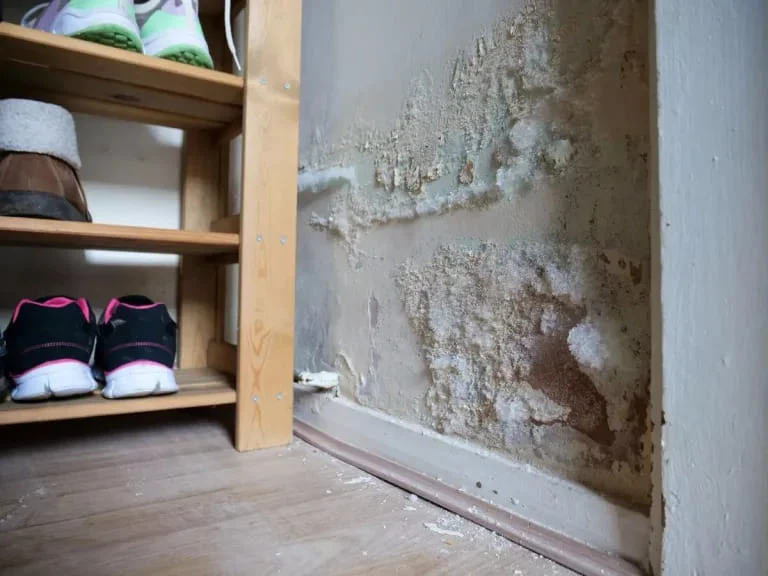
A landlord damp and mould survey from Lansdown Associates establishes what is causing damp or mould in a rented home, how serious it is and what work is needed to put it right. Our RICS Chartered Building Surveyors inspect the property, take readings and provide a written report with photographs, a risk rating and prioritised recommendations that can be shared with your tenant and your contractor. We do not sell damp-proofing treatments or carry out remedial works, so our advice is independent.
Who the survey is for
The service is intended for those responsible for privately rented homes:
- Private landlords who have received a complaint, or who wish to understand a recurring problem before it escalates.
- Letting agents, who are often the first to receive a tenant’s report.
- Managing agents of blocks of flats, where damp may originate in the roof, main walls or common parts.
- Portfolio landlords who need consistent reporting across a number of properties.
Housing associations and councils should see our damp and mould surveys for housing associations.
Responding to a tenant complaint about damp or mould
The way a landlord responds to the first report often determines how the matter develops. The government’s guidance on the health risks of damp and mould, which also applies to private landlords and managing agents, advises landlords to respond sensitively, assess the issue with urgency and tackle the underlying causes. It also states that it is “totally unreasonable” to blame damp and mould on tenants’ lifestyle choices.
A proportionate response will usually involve:
- Recording the date and method of the report.
- Asking about the household, and acting more quickly where there are young children, older people or anyone with a health condition.
- Arranging access. Section 11 of the Landlord and Tenant Act 1985 allows the landlord to view the property’s condition at reasonable times, on 24 hours’ written notice to the occupier.
- Dealing with any obvious immediate issue, such as an active leak.
- Establishing the cause before specifying works, with an independent survey where the cause is unclear, disputed or recurring.
- Explaining the findings to the tenant, carrying out the works and checking that the problem has been resolved.
Our guide to landlord responsibility for damp and mould explains the duties behind each step.
Your legal position as a landlord
The following is general information about the position in England, not legal advice. Landlords should obtain legal advice on specific cases.
Repairing obligations and fitness for human habitation
For most shorter residential tenancies, section 11 requires the landlord to keep the structure, exterior, gutters and drains, and the installations for water, gas, electricity, sanitation, heating and hot water, in repair. Section 9A requires the home to be fit for human habitation throughout the tenancy, and freedom from damp is one of the matters taken into account. Our guide to landlord repair obligations explains notice, exceptions and claims.
HHSRS and council enforcement
Councils assess damp and mould under the Housing Health and Safety Rating System (HHSRS). Where a council finds a Category 1 hazard it must take action. According to the government’s HHSRS landlord and agent guide, councils can impose a civil penalty of up to £7,000 when first taking action on a Category 1 hazard that it would have been reasonably practicable for the landlord to remove, and up to £40,000 for failing to comply with an improvement notice (offences on or after 1 May 2026). Our guide to the HHSRS damp and mould hazard explains how hazards are scored.
Awaab’s Law and the private rented sector
Awaab’s Law currently applies to social landlords in England only. The Renters’ Rights Act 2025 contains powers to extend it to private rented homes, but the relevant provision is not yet in force, the government has said it will consult on the detail, and no start date has been confirmed. Separately, a new Decent Homes Standard, which includes a damp and mould criterion, will apply to private and social rented homes from 2035.
Landlords who investigate promptly and keep clear records now will be well placed when the rules change. See our guide to Awaab’s Law for private landlords.
Evidence and records
If a complaint reaches the council, a tribunal or a court, the landlord will need to show what was reported, when, and what was done about it. The government’s guidance recommends keeping records of tenant reports, investigations, remedial work, follow-up visits and complaints. A good record includes:
- the date and method of each report, and every access attempt or written notice
- inspection findings, photographs and readings
- the works instructed and the completion date
- communication with the tenant about the findings
An independent survey report, dated and supported by photographs and readings, records the condition of the property and the cause of the problem at a particular date.
What the landlord damp and mould survey includes
The survey follows the same method as our main damp and mould survey, focused on the questions landlords and agents need answered. Depending on the property, it may include:
- an inspection of the building fabric inside and out, including roofs, walls, rainwater goods and windows
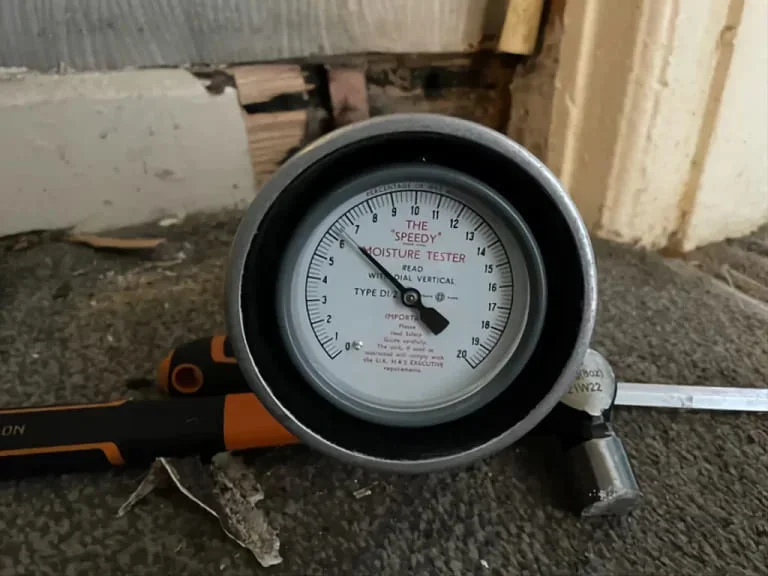
- moisture meter readings and thermal imaging to map dampness, cold spots, thermal bridging and hidden leaks
- calcium carbide testing and salt analysis, where needed
- airflow analysis and an assessment of extract fans, trickle vents, heating and insulation
- room-by-room readings of ambient temperature, relative humidity and dew point
A report you can share with tenants and contractors
The written report sets out the cause or causes, such as condensation, penetrating damp, rising damp or a plumbing leak, with photographs and readings, a risk rating and prioritised recommendations that separate immediate work from longer-term preventative measures. Any advice on heating and ventilation is provided alongside the repairs, not instead of them.
The report is written in plain English so that it can be shared with the tenant, which may help to rebuild trust. Contractors can price from the recommendations, reducing the risk of paying for work that does not address the cause. We can also prepare a separate specification or scope of works for your contractors, so that quotations are based on the same defined work.
If a dispute has already reached a letter of claim, our damp and mould expert witness service provides independent evidence under CPR Part 35, subject to the usual checks on independence.
Re-inspection after works
Treating mould without addressing its cause is a common reason for repeat complaints. We offer follow-up verification inspections to confirm that remedial works have resolved the problem, and the government’s guidance recommends inspecting at least six weeks after remedial work.
Portfolio and agency instructions
We accept instructions from private landlords, letting agents and managing agents, whether for a single property or a whole portfolio, and there is no minimum number of properties. For portfolio landlords and agents, we can inspect a number of properties and report in a consistent format, making it easier to compare cases, brief contractors and keep records. Where the same problem appears in several homes, our findings may point to a common cause that can be built into a planned and preventative maintenance programme.
How it works
- Enquiry – tell us about the property, the complaint and any deadline, such as a council notice.
- Instruction – we provide a free quotation and confirm the scope, testing and fee in writing.
- Inspection – once the tenant has been given notice.
- Report – our findings and recommendations, normally issued within 5 to 7 working days of the inspection.
- Re-inspection – if required, after the works.
Why choose Lansdown Associates?
- Independent – we do not sell treatments or carry out remedial works.
- RICS Chartered Building Surveyors – we diagnose building pathology, not only visible symptoms.
- Expert witness standard – our director John Jackson MRICS MEWI is a member of the Expert Witness Institute (EWI).
- National coverage – offices in Liverpool, Manchester and London.
Frequently asked questions
Do I need a survey for every damp complaint?
Not necessarily. Some defects, such as an overflowing gutter, are obvious and can be repaired straight away. A survey is advisable where the cause is unclear, the problem recurs, the tenant disputes the explanation, the household is vulnerable or the council is involved.
Can I share the report with my tenant?
Yes. It is written to be shared with tenants, contractors and, where necessary, the council or your legal advisers.
Will the survey say whether the tenant is to blame?
The survey records every contributing factor, including occupancy. However, everyday activities such as cooking and bathing produce moisture, and government guidance says landlords should not blame damp and mould on lifestyle. Our report concentrates on the cause and the remedy.
How much does a landlord damp and mould survey cost?
The fee depends on the size, type and location of the property and the testing required. We provide a free quotation, and the fee is confirmed in writing before we start.
Book a landlord damp and mould survey
To discuss a tenant’s complaint or a portfolio instruction, or to request a free quotation, call 0151 374 0905 or email office@lansdownassociates.co.uk, Monday to Friday, 09:00 to 17:00. We usually respond within one working day.