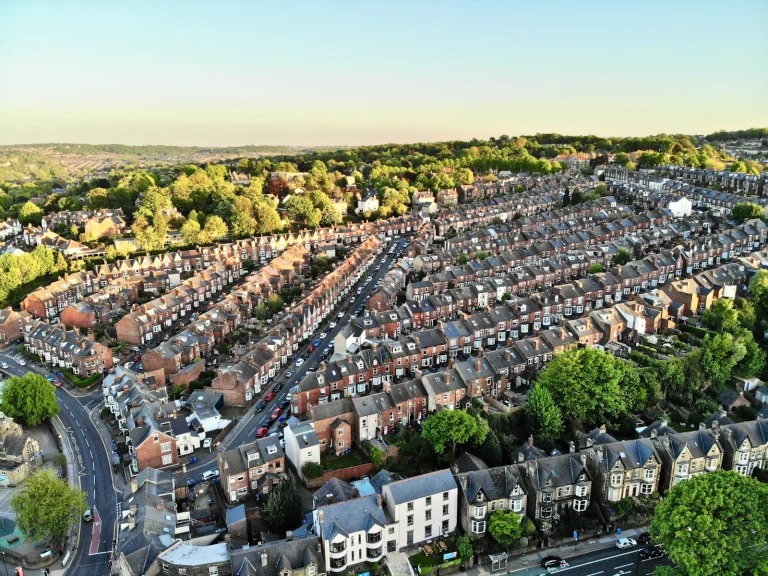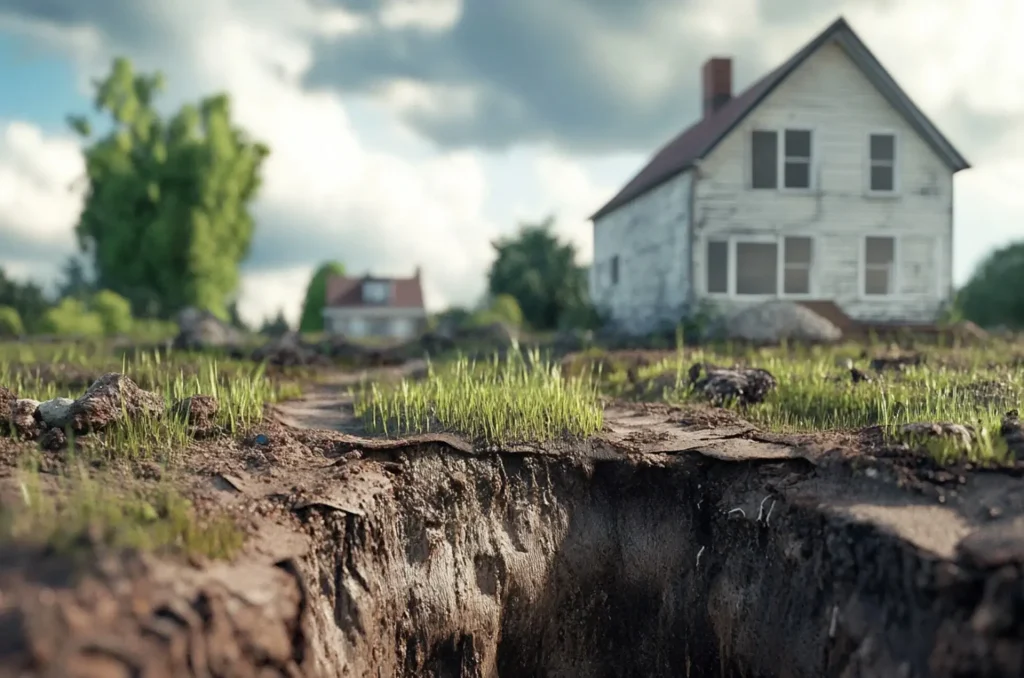
What is subsidence? In property terms, subsidence is the downward movement of the ground that supports a building, which drags the foundations down with it and can cause cracking and distortion. The weight of the building is not usually the trigger. Subsidence normally starts with a change in the ground itself, such as clay soil drying out, a leaking drain washing soil away, or old mine workings collapsing. Most cracks are not subsidence, but the ones that are need prompt, professional attention.
This guide explains how subsidence differs from settlement, heave and landslip, the warning signs to look for, the main causes, and what to do if you are worried about a home you own or plan to buy.
Subsidence, heave, landslip and settlement: the differences
These four terms are often used interchangeably, but they mean different things, and insurers treat them differently.
| Term | What happens | Typical cause |
|---|---|---|
| Subsidence | Ground beneath the building moves downwards | Shrinking clay, tree roots, leaking drains, mine workings, soluble rock |
| Heave | Ground beneath the building moves upwards | Clay soil rehydrating and swelling, often after a large tree is removed |
| Landslip | Ground moves down a slope | Unstable slopes, saturated ground, erosion |
| Settlement | The building compresses the ground under its own weight | Normal consolidation after construction, or inadequate foundations |
Subsidence
With subsidence, the ground would have moved downwards whether or not the building was there. The foundations lose support, often unevenly, so one part of the building drops more than another.
Heave
The British Geological Survey describes heave as swelling pressures lifting structures unevenly. It is the reverse of clay shrinkage and is often seen when a mature tree that had been drying the soil is removed, allowing the clay to take up water and expand.
Landslip
Landslip is the movement of ground down a slope. Properties on or near hillsides, embankments, cliffs and riverbanks are most exposed.
Settlement
Settlement is movement caused by the weight of the building compressing the ground beneath it. Most new buildings settle slightly in their early years, and minor settlement cracks are common. Settlement usually stabilises over time; subsidence may not. Insurance policies commonly treat settlement differently from subsidence, so check your policy wording.
What are the signs of subsidence?
No single sign proves subsidence, but the following are worth investigating:
- Diagonal cracks, especially around door and window openings. The Association of British Insurers points to cracks that are wider at the top than the bottom and thicker than a 10p coin; the BGS mentions diagonal cracks more than 3 mm wide.
- Cracks that can be seen inside and outside in the same position.
- Doors and windows that start to stick when there is no other explanation, such as swelling from damp.
- Rippling wallpaper that is not caused by damp.
- Gaps opening up between walls and ceilings, floors and skirtings, or where an extension meets the main house.
- Cracks that grow or reappear after filling, particularly after a long, dry summer.
Many cracks are harmless: shrinkage cracks in new plaster, thermal movement or minor settlement. What matters is the pattern, width, direction and whether the crack is still moving. A surveyor can judge these from the pattern of cracking and, where needed, by monitoring the cracks over time.
What causes subsidence?
Shrinkable clay soils
Clay swells when wet and shrinks when it dries out. According to the BGS, shrink-swell is one of the most costly and widespread geological hazards, and the most susceptible areas are in south-east England where the London Clay Formation occurs. Hot, dry summers make it worse.
Trees and vegetation
Tree roots draw moisture from the soil. On clay, that can dry the ground beneath shallow foundations and cause it to shrink. Large trees close to a house, and paving that stops rainwater reaching the soil, increase the risk. Always take professional advice before removing a large tree near a building, because removal can cause heave.
Leaking drains and water pipes
Escaping water can soften clay or wash fine particles out of sandy and gravelly soils, leaving voids under foundations. Defective drains are a common and often overlooked cause.
Mining and underground workings
Many former coalfield and mining areas of the UK have a legacy of underground workings that can collapse or settle. The Mining Remediation Authority (formerly the Coal Authority) holds coal mining records and provides mining reports for property transactions.
Soluble rocks and other ground conditions
Some rocks, such as limestone, chalk and gypsum, can dissolve over time and create voids and sinkholes. Soft, compressible ground such as peat can also settle under load or as it dries.
Climate
Longer, hotter and drier summers dry out clay soils more deeply, while very wet periods can cause swelling or wash out fine soils. Changing weather patterns are one reason subsidence claims tend to rise after dry summers.
What to do if you suspect subsidence
If you own the property
- Record the cracks. Photograph them with a ruler, note the date and mark the ends lightly in pencil so you can see if they grow.
- Contact your buildings insurer early. Subsidence claims are usually handled through the insurer, who may appoint an engineer or loss adjuster to monitor the movement and identify the cause.
- Check for leaks. Look for leaking gutters, downpipes and drains, and have drains CCTV-surveyed if movement is suspected.
- Do not remove large trees without professional advice.
- Get independent advice if you want an impartial view on the cause, extent and likely repairs.
Many subsidence cases are resolved by dealing with the cause, for example repairing drains or managing vegetation, followed by crack repair. Underpinning is only needed in a minority of cases.
If you are buying a property
Buying a home is likely to be the biggest investment you make, so understand any structural risk before you exchange contracts.
- Commission a detailed survey. A RICS Level 3 building survey is the most thorough option and is designed to identify and explain signs of structural movement, including whether it appears historic or ongoing, and what further investigation is recommended.
- Ask the seller questions. Has there been a subsidence claim, underpinning or monitoring? Is there a certificate of structural adequacy?
- Ask your conveyancer about searches. In former mining areas a coal mining report is often obtained as part of the conveyancing process.
- Speak to your insurer before you commit. A history of subsidence can affect the availability and cost of cover.
For more on what to check when buying, read our guide on what to look for when buying a house.
Frequently asked questions
Is subsidence covered by home insurance?
Buildings insurance often covers subsidence, heave and landslip, usually with a higher excess. Settlement and some other causes may be excluded. Check your policy wording.
Can a house with past subsidence be a good buy?
It can be, if the cause was identified and dealt with, the building has been stable since, and you can obtain insurance on acceptable terms. A detailed survey and the full claim history are essential.
Will a Level 2 survey identify subsidence?
A RICS Level 2 survey will flag visible signs of movement, but a Level 3 building survey gives a fuller analysis and is recommended for older properties or where movement is suspected.
Does every crack mean subsidence?
No. Most cracks are caused by shrinkage, thermal movement or minor settlement. A surveyor looks at the width, direction and location of a crack and whether it is still moving.
Get an independent opinion
Lansdown Associates is a RICS regulated firm of chartered surveyors. If you are buying a property, or have spotted cracking in your own home, we can inspect and give you a clear, impartial view. Call 0151 374 0905 or email office@lansdownassociates.co.uk.