Black mould in the home is a sign that part of the building is staying damp for long enough for mould to grow. In most cases the cause is condensation on cold surfaces, although leaks and penetrating damp are also common sources. “Black mould” describes how the growth looks, not what it is: colour and appearance cannot identify the species of mould or show whether it is more or less harmful. This guide explains what causes black mould, the warning signs, the health risks identified in government guidance and why cleaning alone rarely resolves the problem.
From a surveying perspective, the mould is the symptom. The moisture that allows it to grow is the problem that needs to be diagnosed and put right.
What people mean by “black mould”
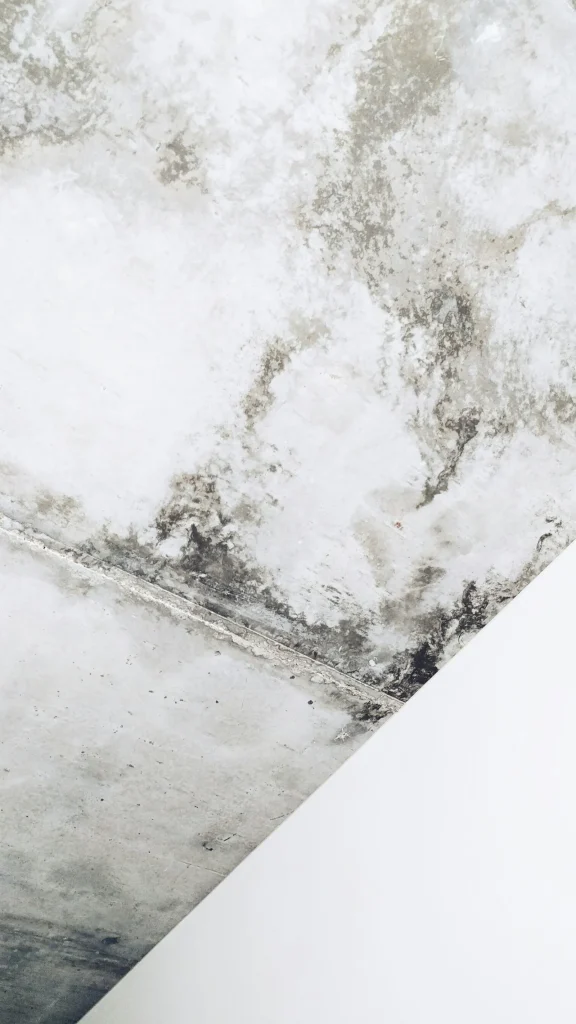
“Black mould” is the term most people use for the dark grey, green-black or black spotting that appears on window reveals, in the corners of rooms, on bathroom ceilings and behind furniture. The phrase “toxic black mould” is often associated with one particular mould, Stachybotrys chartarum. In practice, many common household moulds appear dark, and UK local authority guidance notes that mould can occur in many shades, which makes it difficult to identify by colour (South Kesteven District Council).
In practice, mould growth within residential property can present in a variety of forms and colours. Common genera include Aspergillus, Penicillium, Cladosporium, Alternaria and Stachybotrys, and certain moulds may appear as black, green, white or brown growths.
Why colour and appearance cannot identify the mould
The identification of mould by appearance alone is generally unreliable. Species-level confirmation would require appropriate sampling and laboratory analysis, and colour should not be relied upon as an indicator of species or toxicity.
For most homes, knowing the species would not change the course of action. The government’s guidance treats mould as a hazard whatever its appearance, and refers to microbial sampling only in more complex cases. The guidance is clear that observable evidence of dampness, such as visible mould, mould odour or water damage, including condensation, is sufficient to indicate the need to remedy the issue, and that landlords should not delay action to await medical evidence (GOV.UK). The more important consideration is the environmental condition supporting the growth.
What causes black mould in the home
Mould commonly develops where there is persistent moisture, elevated relative humidity, condensation, inadequate ventilation or cold surfaces. Our guide to the types of damp explains each source in more detail.
Condensation
Government guidance describes condensation as the most common form of damp. Moisture from cooking, showering and drying laundry builds up in the air if it cannot escape, then condenses on the colder parts of the building, such as window frames, corners and walls behind sofas or wardrobes. Mould does not need visible droplets to grow, as our guide to relative humidity and condensation explains.
Cold surfaces and thermal bridging
Poorly insulated or insufficiently heated homes are more prone to condensation. Cold spots also occur where insulation is missing or has gaps, at external corners and wall and ceiling junctions, and at lintels and reveals, which is why mould around windows is so common.
Leaks and penetrating damp
Rainwater entering through defective roofs, gutters, pointing or window seals, and water escaping from plumbing, can keep materials wet for long periods. Mould caused by a leak is usually more localised and often accompanied by staining. A wet wall is also colder, so it may attract condensation as well. If patches appear after bad weather, see our guide to damp patches after rain.
Warning signs of black mould
Where mould appears is often more informative than what it looks like. Signs which may indicate a moisture problem include:
- Dark spotting on window reveals, frames and sills
- Mould in the upper corners of rooms, particularly on external walls
- Mould behind furniture placed against external walls, or on clothes and shoes stored there
- Water on the inside of windows most mornings, and a persistent musty smell
- Mould that returns within weeks of being cleaned
- Staining with a defined edge, or patches that grow after rain, which may point to a leak
None of these signs is conclusive on its own, and more than one cause is often present.
Black mould and health: what the government guidance says
The government’s guidance, Understanding and addressing the health risks of damp and mould in the home, does not distinguish between moulds by colour; its advice applies to damp and mould generally. It explains that:
- Damp and mould can produce allergens, irritants, mould spores and other toxins that are harmful to health, and most people are exposed by breathing them in
- The effects are mainly on the airways and lungs, including cough, wheeze and shortness of breath, a higher risk of airway infections, and the development or worsening of conditions such as rhinitis and asthma
- The eyes and skin can also be affected, and living with damp and mould may affect mental health
- Anyone can be affected, but some groups are at greater risk, including people with pre-existing conditions such as asthma, people with weakened immune systems, pregnant women, children, older people and those with limited mobility
- In the most severe cases, the respiratory effects can cause serious illness and death
This guide does not provide medical advice. The guidance advises that anyone concerned about symptoms should consult a healthcare professional, and that damp and mould should always be addressed promptly.
Why cleaning alone does not solve the problem
Cleaning removes the visible growth, but not the conditions that allowed it to grow. The government guidance is clear that removing surface mould will not stop damp and mould from reappearing, and that recurrence should prompt further investigation. Similarly, applying mould-resistant paint or cleaning products without addressing the source of moisture is unlikely to provide a durable solution.
Cleaning nevertheless has its place. The guidance indicates that occupiers can reasonably remove very small amounts of mould using an appropriate mould and mildew cleaner, in preference to bleach, while wearing a mask, gloves and goggles. Larger areas should only be dealt with by qualified professionals, and mouldy carpets or soft furnishings may need to be thrown away.
Practical steps while the cause is investigated
Everyday measures can reduce condensation, although they are not a substitute for dealing with a defect:
- Cover pans when cooking and keep kitchen and bathroom doors closed while in use
- Use extractor fans during and after cooking and bathing, and keep trickle vents open
- Dry laundry outside where possible, or in a ventilated room with the door closed
- Leave a gap between furniture and external walls, and heat the home consistently
The government guidance regards it as unreasonable to blame damp and mould on “lifestyle choices”. Tenants should report mould to their landlord, and social landlords in England must now investigate significant damp and mould hazards within fixed timescales under Awaab’s Law. Our guide to landlord responsibility for damp and mould explains the duties that apply.
When to get a damp and mould survey
An independent investigation is advisable where:
- Mould returns after cleaning, or covers more than a small area
- The cause is unclear, or condensation and a leak may both be involved
- Occupants are in one of the groups at greater risk
- A landlord needs an independent record of the cause and the work required
- A contractor has recommended costly treatment and a second opinion would help
How an RICS Chartered Surveyor can help
An RICS Chartered Surveyor can establish why the mould is growing. Our damp and mould survey assesses the building fabric, moisture levels, ventilation, heating and thermal performance, using moisture meters, thermal imaging and readings of temperature, relative humidity and dew point. The written report includes photographs, a risk rating and prioritised recommendations, and further specialist testing can be recommended where needed. In more complex cases, we can arrange laboratory mould sampling through a specialist. As Lansdown Associates does not sell treatments or carry out remedial works, our advice is based only on the evidence.
For a practical overview of the options for each cause, from short-term cleaning and ventilation to lasting building repairs, see our guide to damp and mould remedies.
Frequently asked questions
Is black mould dangerous?
Government guidance explains that damp and mould can harm anyone’s health, and that some people are at greater risk. Colour is not a reliable indicator of how harmful a mould is, so any growth should be taken seriously. Anyone concerned about symptoms should speak to a healthcare professional.
Should I have black mould tested?
In most homes, testing is not necessary. Laboratory analysis is the only reliable way to identify a species, but the course of action is usually the same whatever the species: find and correct the source of moisture, then clean or remove affected materials safely. Where sampling is justified, we can arrange laboratory analysis through a specialist.
Why does black mould keep coming back?
Because the conditions that allowed it to grow are still present, whether persistent condensation, a cold surface, inadequate ventilation or an unidentified leak. Recurring mould is a clear sign that the cause needs investigating.
Speak to an RICS Chartered Surveyor
If black mould in the home keeps returning, or the cause is unclear, our RICS Chartered Surveyors can investigate. For a free quotation, call 0151 374 0905 or email office@lansdownassociates.co.uk (Monday to Friday, 09:00 to 17:00). We usually respond within one working day.