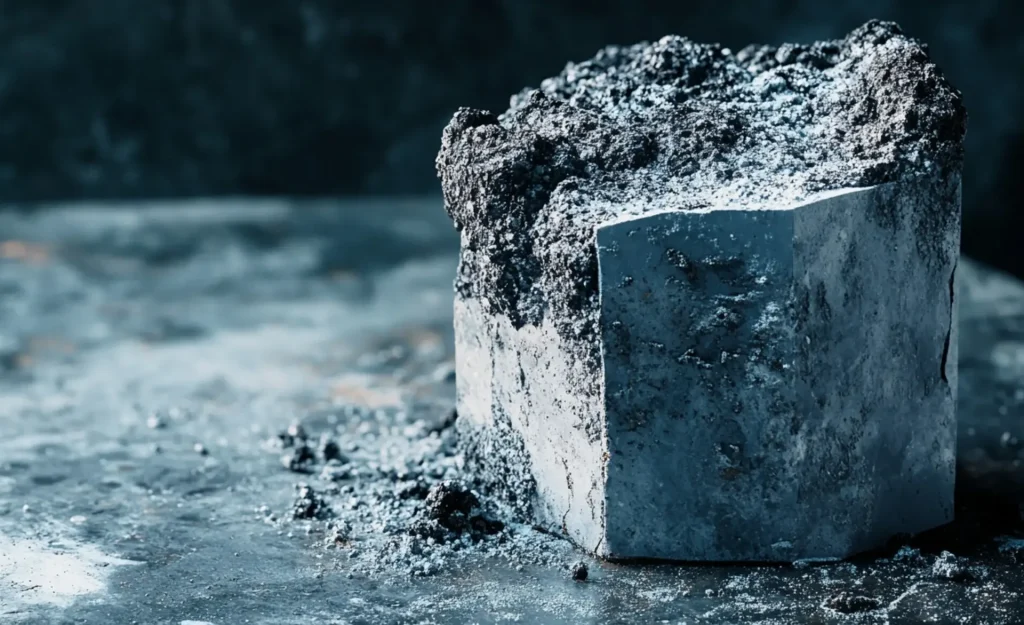
A calcium carbide test measures the moisture content of a small sample of masonry, mortar or plaster drilled from a wall. Unlike a hand-held moisture meter, which only gives a relative surface reading, the calcium carbide test tells the surveyor how much water is actually in the material. That makes it one of the most useful tools for finding out whether a wall is genuinely damp or only appears to be.
Our RICS Chartered Surveyors use calcium carbide testing as part of our damp and mould surveys, and to support evidence in expert witness reports. This guide explains how the test works, how it is carried out, and what the results can and cannot tell you.
Why surveyors use the calcium carbide test
Most hand-held moisture meters work by measuring electrical conductivity and are calibrated for timber. On masonry and plaster, their readings are only relative. Salts left behind by past damp, carbon in some plasters, foil-backed wallpaper and metal fixings can all give high readings on a wall that is dry. This is one of the main reasons damp is misdiagnosed, as we explain in our guide to the types of damp.
The calcium carbide test gets round this problem by measuring the water in a physical sample directly, without relying on conductivity. It helps a surveyor to:
- Confirm whether a wall that gives high meter readings is actually wet
- Compare moisture content at different heights and depths in a wall
- Distinguish moisture within the wall from moisture at the surface
- Support a diagnosis with measured evidence that can be reported and relied on
How the calcium carbide test works
Calcium carbide (CaC₂) is a chemical compound that reacts with water to produce acetylene gas and calcium hydroxide. When a sample of material is sealed in a pressure vessel with calcium carbide, any water in the sample reacts with the reagent and releases gas. The more water there is, the more gas is produced and the higher the pressure inside the vessel.
A pressure gauge on the vessel converts that pressure into a moisture content reading, usually expressed as a percentage of the wet weight of the sample. Because the result comes from the water physically present in the sample, it is not distorted by salts or other conductive materials in the way a moisture meter reading can be.
The procedure step by step
Equipment
- A calcium carbide moisture testing vessel with a pressure gauge
- Calcium carbide reagent
- Accurate scales for weighing the sample
- A drill and bit for collecting samples
- Protective gloves and eye protection
1. Collecting the sample
The surveyor drills into the wall to collect a sample of masonry, mortar or plaster as dust or fine fragments. A slow drill speed is used to avoid heating the material, which could dry the sample and give a falsely low result. Samples are usually taken from inside the wall, below the surface, and often at several heights to build up a moisture profile.
2. Weighing the sample
The sample is weighed to the quantity specified for the particular vessel. Accurate weighing matters, because the gauge reading depends on a known sample weight.
3. Loading the vessel
The sample and the calcium carbide reagent are placed in the vessel in a way that keeps them apart until the vessel is sealed. If they touch before sealing, some of the gas escapes and the reading will be too low.
4. Sealing and mixing
Once the vessel is sealed, it is shaken so that the sample and reagent mix and react. Steel balls inside the vessel help break up the sample so that all of the moisture can react.
5. Reading the result
After the reaction has run and the gauge has stabilised, the surveyor records the reading and converts it, where necessary, to a moisture content figure using the manufacturer’s tables.
6. Releasing the gas safely
Acetylene is flammable. The vessel is opened away from any source of ignition, preferably outdoors, and the spent material is disposed of appropriately.
What the results tell you, and what they do not
The calcium carbide test measures total moisture content. That includes water that has entered the wall from a source such as rain, a leak or the ground, and also moisture that hygroscopic salts have drawn from the air.
That leads to an important point about interpretation:
- A low reading is strong evidence that the sampled material is dry. This is where the test is most decisive.
- A higher reading shows that there is moisture in the material, but not necessarily where it has come from. Salts from old damp can hold significant moisture even when there is no active source.
Where readings are high, the next step is usually further laboratory-style testing. Gravimetric testing weighs a sample, dries it and weighs it again to find its moisture content. Comparing the total moisture content with the moisture the sample absorbs from the air under controlled conditions (its hygroscopic moisture content) helps show how much of the moisture is caused by salts and how much by an active water source. This approach is widely used in damp diagnosis and is described in BRE Digest 245, Rising damp in walls: diagnosis and treatment, the recognised BRE guidance on diagnosing rising damp.
Results are always read alongside the rest of the survey: the pattern of damp, the external condition of the building, environmental readings and salt analysis. No single test gives the full answer.
When a calcium carbide test is useful
- When a contractor or report has diagnosed rising damp on the strength of moisture meter readings
- When a wall has been treated before and still shows high meter readings
- When there is a dispute about whether a wall is damp, such as in a housing disrepair claim
- When deciding whether plaster needs replacing after a leak or penetrating damp has been repaired
- When confirming that a wall has dried out after remedial work
Calcium carbide testing and expert evidence
Measured evidence carries more weight than a meter reading when damp is in dispute. Our director, John Jackson MRICS MEWI, is a member of the Expert Witness Institute (EWI), and our surveyors use calcium carbide testing to support CPR Part 35 expert reports in housing disrepair cases. Find out more about our damp and mould expert witness service and our wider housing disrepair work.
Frequently asked questions
Does a calcium carbide test damage the wall?
It needs small drill holes to collect samples. These are neat and easily filled, and the surveyor will explain where samples are needed before drilling.
Is a calcium carbide test more accurate than a moisture meter?
For masonry and plaster, yes, in the sense that it measures the actual moisture content of a sample. Salts and other materials do not distort the result as they can with an electrical reading. Moisture meters are still useful for mapping patterns across a wall quickly.
Can a calcium carbide test prove rising damp?
Not on its own. It shows how much moisture is in the sample. Diagnosing rising damp needs a moisture profile through the wall, consideration of salts, and an assessment of other possible sources such as condensation, leaks and penetrating damp.
Need an accurate damp diagnosis?
If you have been told you have damp and want the evidence checked, our RICS Chartered Surveyors can help. Book a damp and mould survey, or for homeowners and buyers wanting a second opinion, an independent damp survey. You can also read what happens during a damp survey.
Call 0151 374 0905 or email office@lansdownassociates.co.uk.